If you’re a marketing manager, a boutique hotel owner, or a designer in Australia or New Zealand, you’ve likely been tempted by the “cents-per-unit” deals on overseas marketplace sites. A keyring is just a bit of rubber and metal, right?
Wrong. In 2026, a “simple” promotional product is either a high-value brand ambassador or a massive legal liability sitting in your customer’s pocket.

At QW Direct, we’ve seen what happens when “mystery plastic” fails. We don’t just claim our products are better; we prove it with rigorous, independent laboratory testing. If you want to make your boss or your clients say, “Holy shit, I didn’t realise there was this much science behind a keychain,” then you need to understand what’s actually inside the products you’re putting your logo on.
1. The Heavy Metal Hazard: Is Your Logo Toxic?
Most people don’t think about a guest’s child chewing on a room key or a client handling a promotional keyring all day. But if that product contains Lead (Pb) or Cadmium, your brand is effectively distributing a toxin.
We put our PVC Panda Keychains through the wringer with TÜV Rheinland and SGS to ensure they meet the world’s strictest safety standards. The results? Our substrate materials—the “meat” of the keyring—returned “Not Detected” (ND) results for Lead, far exceeding the 100ppm regulatory requirements.
When you choose a lab-tested product, you aren’t just buying a promo; you’re buying the certainty that your brand won’t be associated with a product recall or a safety scandal.
2. The “Mouth-Safe” Factor: Phthalates and Food-Grade Silicone
If your brand uses silicone or soft PVC, “non-toxic” isn’t a buzzword—it’s a requirement. Many cheap PVC products use Phthalates (like DEHP or DBP) to make the plastic soft. These are known endocrine disruptors and are strictly regulated under the CPSIA Section 108 and California Prop 65.
Our testing confirms that our materials are Phthalate-free. Furthermore, our silicone rubber options meet FDA 21 CFR 177.2600 standards for “Total Extractive Residues”. This means the material is food-grade and safe for prolonged skin contact.
If your current supplier can’t produce a report showing a “PASS” for ASTM F963-23 Phthalate content, you are taking a massive gamble with your brand’s reputation.
3. Built for the “Real World”: Torque and Tension Testing
A keyring that snaps off the first time it’s pulled out of a tight pocket is a waste of your marketing budget. It’s “dead” advertising.
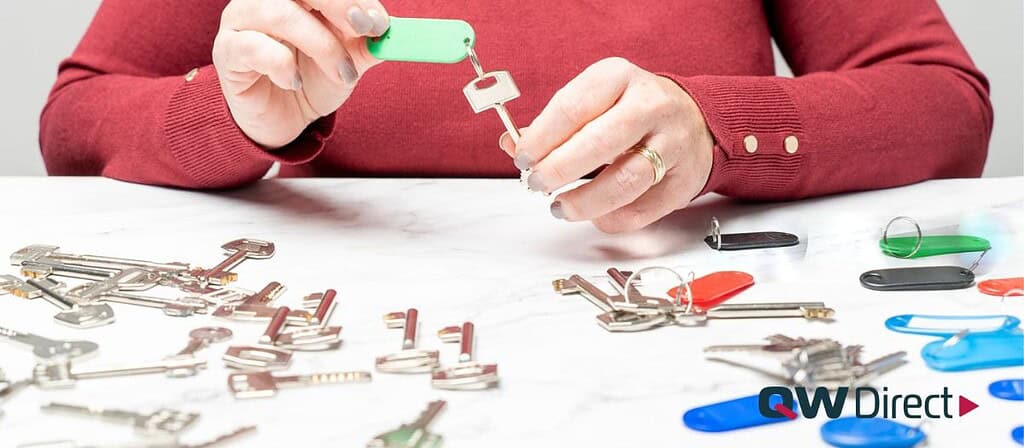
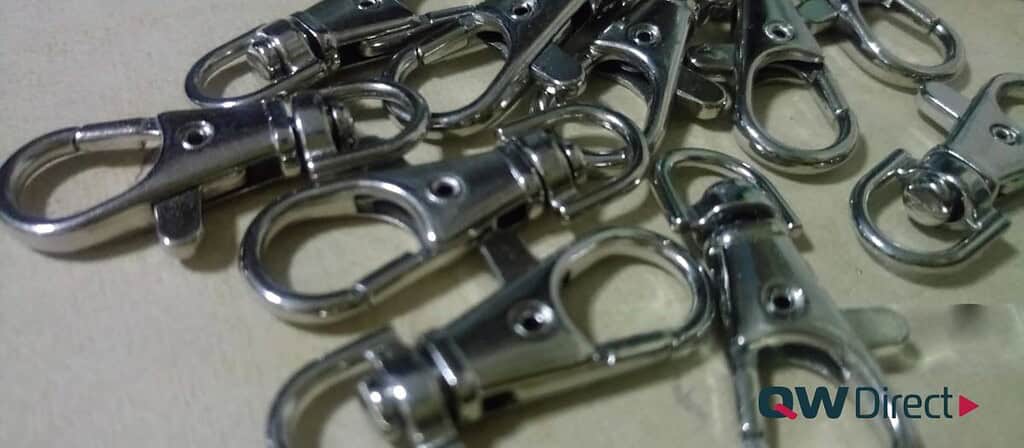
Our hardware—including the silvery metal hooks, lobster clasps, and rings—isn’t just “shiny”; it’s engineered. Our components are subjected to “Use and Abuse” testing that simulates years of wear in days:
Tension Testing
Our keyrings are pulled with 15 lbs of force to ensure the chain and loop stay connected.
We apply 3 in-lbf of torque to ensure the metal fittings won’t twist off or snap under pressure.
Torque Testing
Impact & Compression
From drop tests of 4.5 feet to 30 lbs of compression, these products are built to survive the chaos of a guest’s daily life.
4. The Fire-Safety Advantage: DNI vs. Flammable
For hotels, lodges, and high-occupancy accommodation, fire safety is non-negotiable. Many synthetic materials are essentially “solid fuel” if they catch a spark.
Our PVC materials were tested under 16 CFR Part 1500.44 (Flammability of Solids). The lab result? DNI (Did Not Ignite) or IBE (Ignite But Self-Extinguish). Our products are engineered to resist catching fire, providing an extra layer of risk management that cheap alternatives simply ignore.
5. Global Compliance: The CE Mark and Beyond Promotional Product
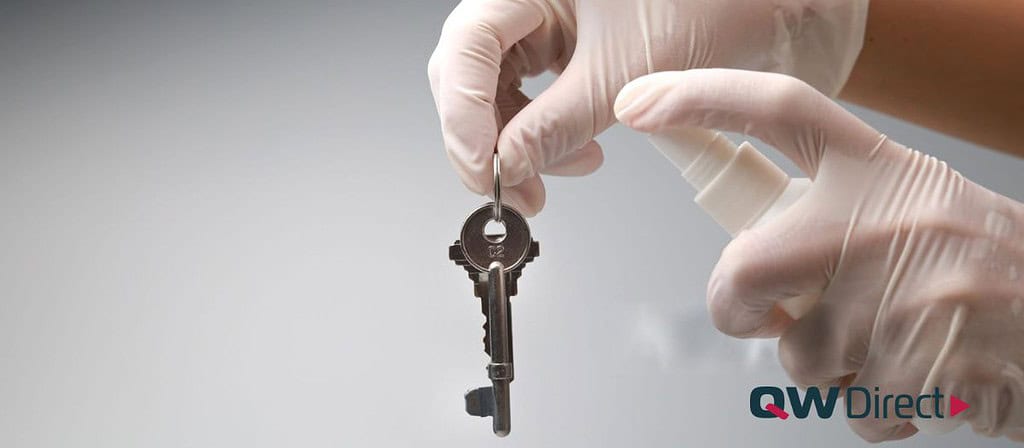
If you are a promotional product designer or a corporate buyer, you need to know your items meet international benchmarks. Our keyrings carry the CE Mark and comply with the European Toys Directive 2009/48/EC.
This isn’t just about “toys”—it’s about a universal standard of manufacturing excellence that covers everything from sharp points and edges to chemical composition.
The QW Direct Difference: Why We Obsess Over the Details
We don’t expect you to be a chemical engineer or a materials scientist. That’s our job. When you partner with us, you’re getting more than a logo on a keyring; you’re getting:
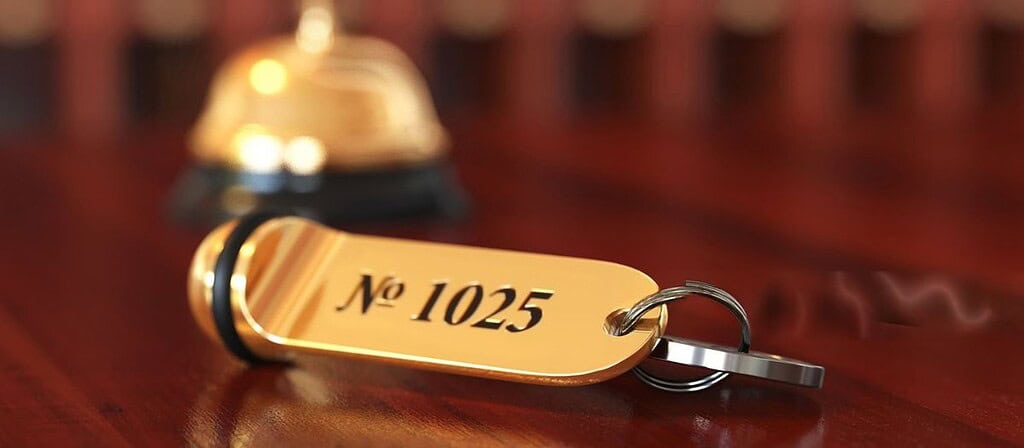
Laser-Lettered Precision
Unique numbering for every room or cabin that won’t fade or chip.
UVP Integration
We help you turn a physical object into a digital tool with QR code integration for emergency info or guest direct-booking.
Hard Proof Brand-Safe
Every claim we make is backed by the TÜV Rheinland and SGS reports we’ve discussed here.
Stop guessing and start guaranteeing. Your brand is too valuable to be attached to a sub-standard product.
Ready to see the lab-tested difference for yourself? [Enquire here for a custom quote on certified, high-durability keyrings]